

Update No. 429
Good Morning, Redeemer Family
Sermon Recordings
This week, Fraser unpacked Exodus 35–36:7, revealing that keeping the Sabbath and practicing radical generosity are two beautiful responses flowing from the exact same source: a heart transformed by God's grace. When we truly grasp the depth of our sin and the staggering mercy of God, our natural response is a deep desire to rest in His presence and generously surrender our resources, just like the Israelites, whose overwhelming offerings forced Moses to actually order them to stop! Fraser challenged us to examine our own reluctance to rest or give, warning us not to settle for our culture’s cheap version of "authenticity" by simply accepting our stubborn, flawed feelings. Instead, we are exhorted to distrust our own deceitful hearts and boldly cry out to God, asking Him to reshape our desires and turn our devotion entirely back to Him. Listen to the full message to explore how encountering God's grace can totally transform what you treasure.
If you weren’t able to make it on Sunday or if you’d like to listen to this sermon or any previous sermons, they’re all available here… or you can just listen below.
Can’t wait until Wednesday to listen to our latest sermon? Good news, you don’t have to! Our sermons are now (generally) uploaded by 8pm every Sunday.
ReMemer Church
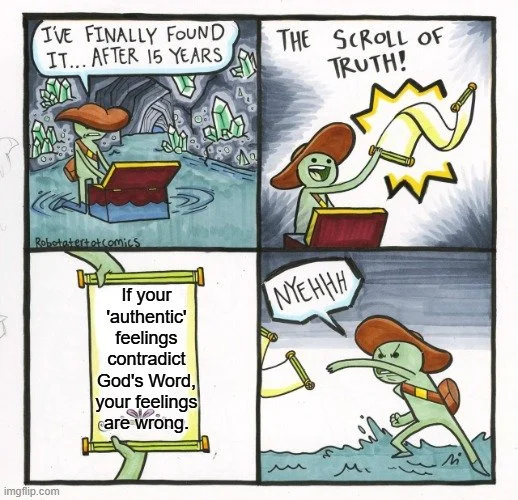
Wednesday In The Word - Tonight!

Wednesday in the Word is on tonight, from 7:15pm at the Rogers (68 Fernleigh Street)! This is open to anyone and everyone (13+), and if you’ve got younger kids that need to come along, they’re welcome to hang out too!
Just a reminder that I have slightly tweaked the questions. They’re essentially the same, just worded slightly differently. Be sure to reflect on these questions as you read the passage so that you can come prepared to share!
What did you find interesting about this passage? Why?
What questions come to mind when reading this passage?
What do we learn about people from this passage?
What do we learn about God (or Jesus) from this passage?
In light of this passage and what we’ve discussed, how will you practically apply it this week?
Our discussions will be based around Luke 10:25–37, but feel free to engage with the rest of the context reading as well.
Context Reading: Luke 10
Focus Passage: Luke 10:25–37
Tea & Testimony

Our next gathering will be on Saturday, June 27th, from 7pm at the Flemings (146A South Road, Spotswood)!
What to expect? Good things. What to anticipate? God’s faithfulness. Are expectation and anticipation the same thing? No, no they’re not. Should good things and God’s faithfulness be both expected AND anticipated at Tea & Testimony? Yes, yes they should.
Prayer & Fasting Weekend
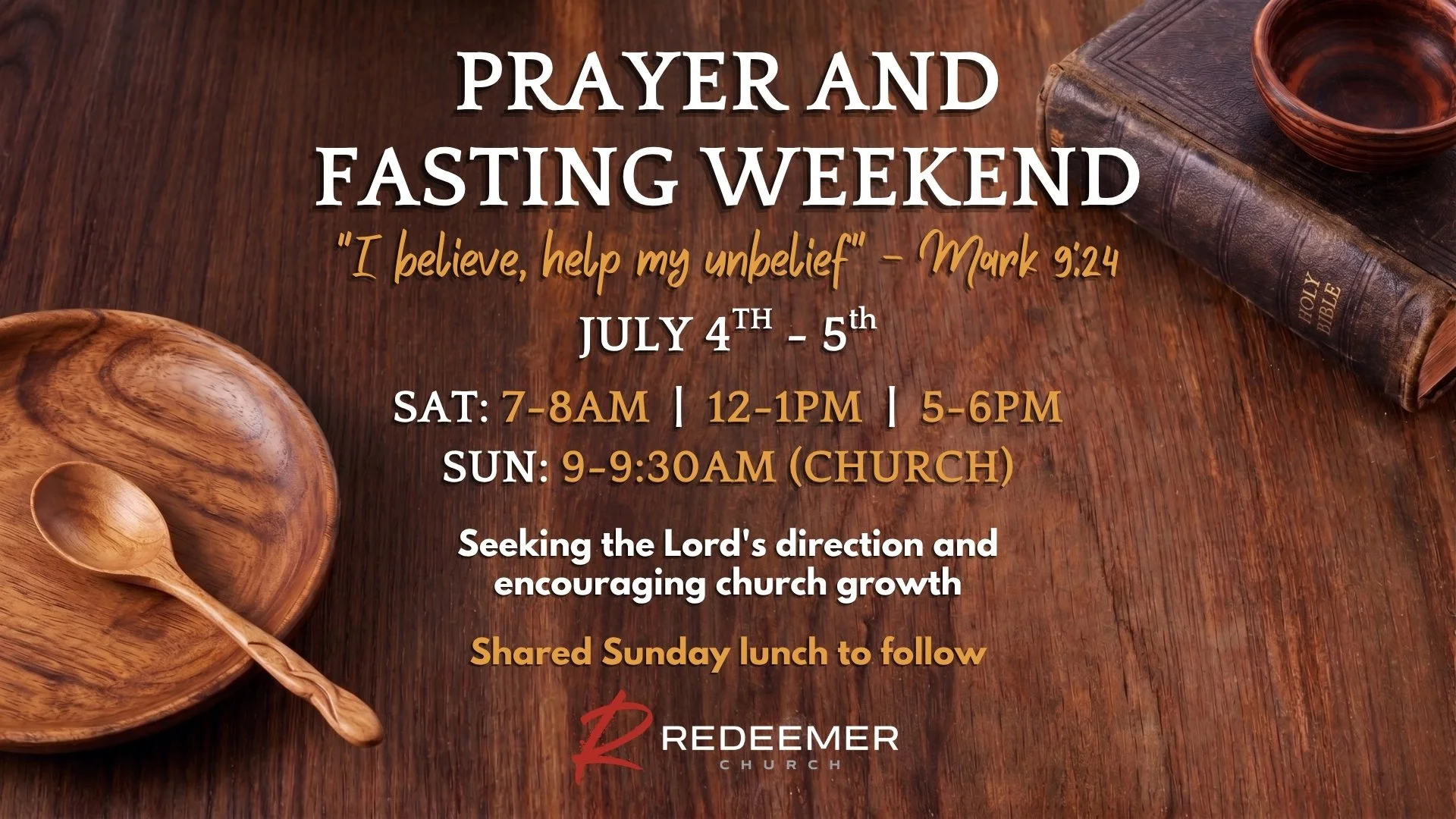
Our Prayer and Fasting Weekend is coming up on July 4th–5th. Everyone at Redeemer is encouraged to take part in fasting over the weekend in whatever way is appropriate for you and your family.
The idea is that, as a church, we seek the Lord’s direction, asking that He would shape us both as individual members of His body and as a church community. We are praying that we would grow a deeper appreciation and love for God, and that He would sanctify us so we can be useful for the good work He has for us. We want to grow in our Christlikeness, look beyond ourselves, and discern how we, as individuals and as a church, can make Him known throughout New Plymouth, New Zealand, and beyond.
The times set aside on Saturday are for us to come together for an hour of dedicated prayer. We don’t expect everyone to make it to every gathering, but if you could make it to at least one, I’m sure it will be a great encouragement and benefit to you and to everyone gathered.
At this stage, the morning session will be held at Cam and Shaina’s (and Fletcher’s!) house. We don’t yet have venues for the afternoon and evening sessions. If you would like to host one of these at your place, please let us know!
What is fasting?
If you aren't super familiar with the practice of Biblical fasting, hopefully the following excerpt helps. It comes from an article called 'The Biblical Rationale For Embodied Spiritual Practices' by Dr. Michael Emlet in The Journal of Biblical Soul Care. It’s definitely worth a read!
Is fasting Biblical?
Though not a sacrament, the practice of fasting appears throughout Scripture. God instituted fasting from food and drink as a spiritual practice long before anyone was talking about the health benefits of it! It was a regular part of individual and communal life for God’s people in the Old Testament, often associated with prayer or mourning over sin. For example, consider that, in 2 Samuel 12, David fasted for his son’s life; in 2 Chronicles 20, Jehoshaphat proclaimed a fast throughout Judah when faced with a great enemy army; and in Joel 2:12 the Lord called Judah to “return to me with all your heart, with fasting, with weeping, and with mourning.”
The New Testament assumes the regular practice of fasting, and Jesus gives the only instructions related to it: “And when you fast, do not look gloomy like the hypocrites, for they disfigure their faces that their fasting may be seen by others. Truly, I say to you, they have received their reward. But when you fast, anoint your head and wash your face, that your fasting may not be seen by others but by your father who is in secret. And your father who sees in secret will reward you.” (Matthew 6:16–18)
We see examples of the early church fasting before important decisions, such as the appointing of Paul and Barnabas for missionary work (Acts 13:2– 3) or the appointing of elders in the new churches (Acts 14:23). It’s important to note that both eating and refraining from eating throughout Scripture are to be done with God in mind (1 Corinthians 10:31).
How is the physical practice of fasting helpful spiritually?
First, the time you would have spent preparing and consuming food is spent in prayer or reading of Scripture.
Second, physical hunger serves as a reminder of our spiritual hunger (or lack thereof ). Do we have the attitude of David in Psalm 63:1: “O God, you are my God; earnestly I seek you; my soul thirsts for you; my flesh faints for you, as in a dry and weary land where there is no water”? Too often, when I fast, I am reminded that I don’t hunger and thirst after righteousness. An empty stomach reminds me of what I try to fill my life with apart from God. My physical experience makes me more attuned to my spiritual state.
Third, experiencing the absence of food points toward the generous provision of our heavenly Father. Much of the time in the affluent West, fasting is a chosen discipline, and not one forced upon us by food insecurity. Our temporary, freely chosen abstention especially prompts thankfulness for God’s care and bountiful provision and reminds us to pray for others who lack basic food and nutrition.
Fourth, put another way, fasting reminds us of our creatureliness. Psalm 104 is a song to God, the Creator and Sustainer of life. Addressing God, the psalmist says in verses 27–28, “These [that is, all your creatures] look to you, to give them their food in due season. When you give it to them, they gather it up; when you open your hand, they are filled with good things.”
Fifth, practising this form of physical self-denial and restraint helps set a pattern wherein bodily appetites (for food, entertainment, sex, etc.) are submitted to God.
These [bodily] aspects of life in Christ are important to recognize because they have been neglected at times. But nothing I have written here bypasses the soul, as if our bodies allow unmediated access to our Father in heaven or bodily practices automatically result in sanctification. New life in Christ comes through the renewal and cleansing of our hearts by the blood of Jesus Christ. We are new creatures because we have new hearts through the work of the Holy Spirit. We live by faith, not by sight (2 Corinthians 5:7). And yet, engaging the bodily context in which we live is critical for our spiritual formation even as we trust that God the Holy Spirit is working in us “both to will and to work for his good pleasure” (Philippians 2:13).
What should we conclude from this biblical survey of embodied practices associated with worship? Both the Old and New Testaments provide biblical warrant and directives for the use of our bodies in relationship with God in everyday discipleship. Discipleship is sensual, linking the mind with eyes, ears, nose, mouth, and hands. Regular bodily practices tutor the hearts of God’s people toward Him and His kingdom. Through our bodies, we literally “taste and see” that He is good.
Term 3 Rosters
Term 3 is quickly approaching, which means it’s time to update our rosters for July - September. If you are on the Intercessory Prayer, Notices or Scripture Reading rosters and you know of any dates that you won’t be available over the July - September period, please let me know as soon as you can. You can either reply to this email, or send me a direct message through WhatsApp. I plan to have the latest roster out by the end of next week.
What Are Our Kids Learning?
On Sunday, the children learned about the time the Israelites finally reached the edge of the Promised Land. Moses sent twelve spies to explore the land, and while they found it to be beautiful and full of amazing food, ten of the spies were absolutely terrified because the people living there looked like giants. They made the Israelites so afraid that the people actually wanted to go back to being slaves in Egypt! But two spies, Joshua and Caleb, were brave. They knew that no matter how big the giants were, God was much bigger. They trusted that since God had promised them the land, He would give it to them. Sadly, because the rest of the people chose fear over faith, they missed out and had to continue wandering in the wilderness.
We talked about how we can sometimes act just like the scared Israelites. It is easy to doubt God's promises or feel too afraid to do the hard things He asks us to do. But believing God’s promises is what makes us brave! Just as Moses stepped in to pray for the people when they rebelled, Jesus is our even greater Rescuer who prays for us and saves us. Because God kept His biggest promise by sending Jesus to rescue us from our sins, we can trust Him to keep all His promises, including His promise to bring us safely to our ultimate promised land, heaven!
Their memory verse is:
“The Lord is with us; do not fear.” - Numbers 14:9
North Island Biblical Counselling Conference
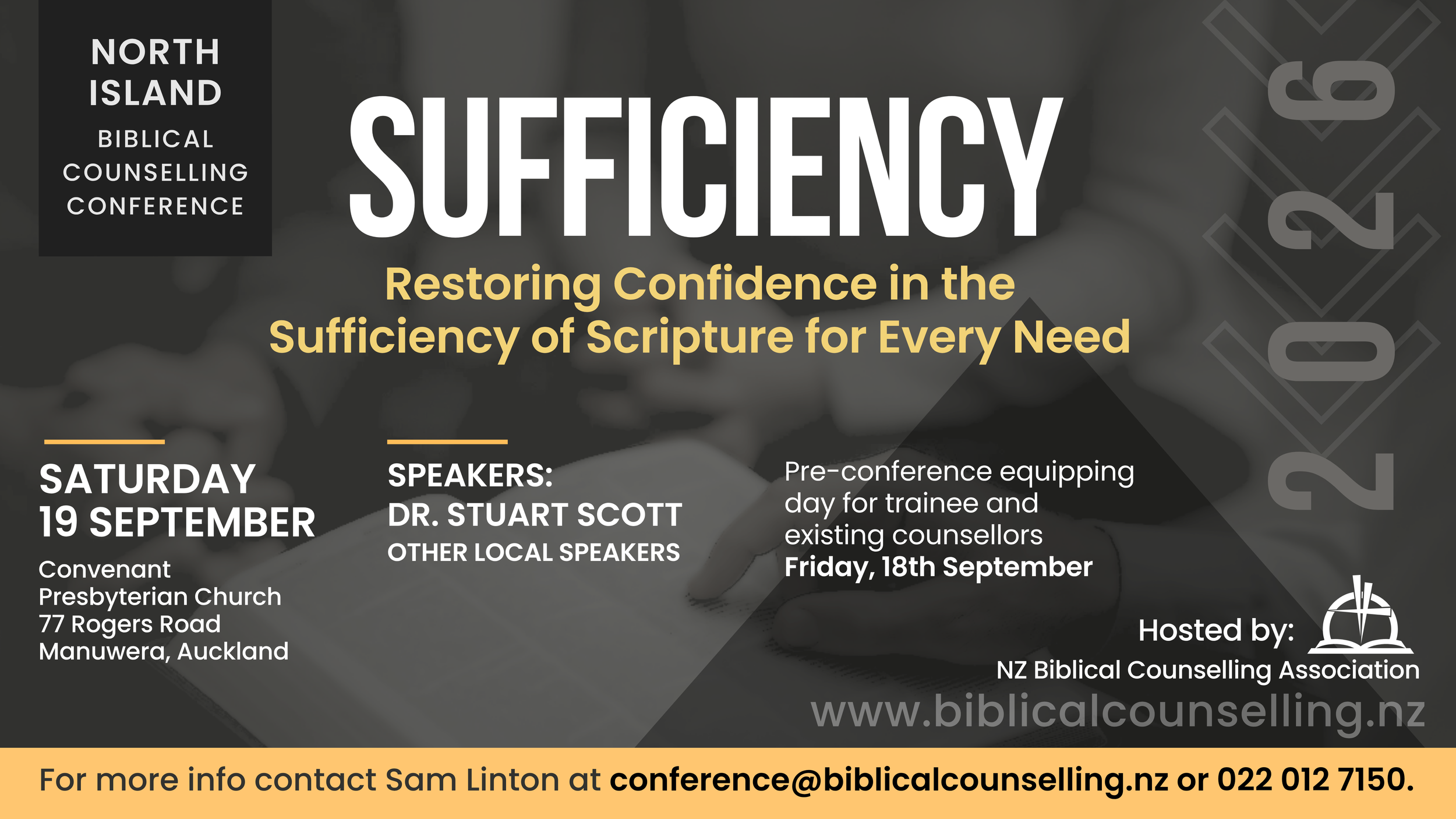
We would love to encourage our church family to attend the upcoming North Island Biblical Counselling Conference! Hosted by the New Zealand Biblical Counselling Association (NZBCA), this event is a fantastic opportunity to be equipped to faithfully care for one another using the Word of God.
Conference Details
Speaker: Dr. Stuart Scott (Professor of Biblical Counselling at The Master’s University and Director of Member Care with ACBC)
Location: Covenant Presbyterian Church, 77 Rogers Road, Manuwera, Auckland
What to Expect
The weekend is split into two connected themes, focusing on how genuine heart-change naturally leads to better care for our church family.
Pre-Conference: A Christlike Mindset
Friday, 18th September 2026 The pre-conference addresses the central battleground of personal change: pride versus humility. Dr. Scott will expose how pride resists change and how cultivating a humble heart opens the way for genuine transformation.
Main Conference: Christlike Love
Saturday, 19th September 2026 Saturday shifts focus to the "one another" passages of the New Testament. You will learn what it looks like to rely on the sufficiency of Scripture to build up the body of Christ and how biblical counselling is simply a natural extension of normal Christian living.
Want a preview? If you want to get a feel for the teaching before signing up, the NZBCA has recently uploaded the video recordings and session notes from this year's South Island conference to their YouTube Channel.
You can also follow NBCA on Facebook and Instagram
Reflection
“In a word, we glorify the Lord in the fire, when we have in exercise, patience, meekness, humility; learning more to distrust ourselves, having a deeper knowledge of our own weakness, and of God’s omnipotence and grace.”
- George Whitefield